內容簡介
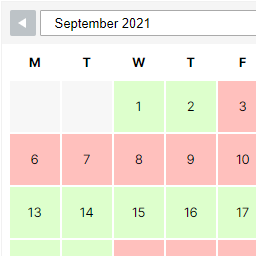
Aponto 是一款專為獨立美容院、診所、教練及小型工作室設計的預約外掛。它提供簡易的服務設定、工作時間安排及行動友好的預約表單,讓客戶能夠在自己的時區內輕鬆預約,並自動發送確認郵件。
【主要功能】
• 無限制的預約及服務,並可分組管理
• 行動優先的預約表單,適用於區塊編輯器
• 時區正確的預約時段顯示
• 支援一名員工的工作時間及假期設定
• 可編輯的八種電子郵件模板
• 簡易的設置精靈,快速上手
外掛標籤
開發者團隊
原文外掛簡介
Aponto is an appointment booking plugin for solo salons, clinics, coaches, and small studios. Add your services, set your working hours, drop the booking form block on any page, and let customers book on mobile — in their own timezone, with automatic email confirmations for both sides.
Every time a customer sees is rendered through a single timezone-safe formatter, so the slot picker, summary, confirmation, manage page, and email all agree. The setup wizard gets a non-technical owner to their first bookable service in a few minutes without reading documentation.
Source code and build tools
The complete human-readable JavaScript and CSS source for this release is included in the plugin under assets/src/. The build configuration, locked dependency graph, and build script are included alongside it.
Public Free release mirror: https://github.com/PressMaximum/aponto-free
See README.md for the source-to-bundle map, direct dependency source links, requirements, and exact rebuild commands. The public repository is generated from the validated Free distribution ZIP after an approved release; development changes are made in the main Aponto repository rather than directly in the mirror.
What you get in the free plugin
Unlimited bookings and unlimited services, grouped into categories.
A mobile-first booking form as a block (aponto/booking-form) for the block editor and Full Site Editing.
Timezone-correct slots — remote customers book in their own timezone, you manage in the business timezone, and both are shown clearly.
One staff member with weekly working hours, date overrides, days off, and per-service assignment.
An optional business location (a fresh install starts with none — you only add one if your bookings need an address).
Eight editable email templates: booking received, confirmed, rescheduled, cancelled, and completed for the customer, plus new-booking and cancellation notices for you. Seven are on out of the box; you can switch any of them on or off.
An appointment reminder email sent to the customer about 24 hours before a confirmed booking.
Add to calendar — a Google Calendar link and an .ics download on the confirmation screen and on the customer’s manage page.
Admin dashboard with a filterable bookings list, a week and day calendar, customers, and services.
Manual bookings and admin reschedule from the dashboard.
Customer self-service cancellation through a secure link in their email.
A guided onboarding wizard that pre-fills from your site settings.
CSV export of bookings and customers (Excel-compatible, protected against spreadsheet formula injection).
Mark bookings paid or unpaid.
Privacy built in: WordPress personal-data export and erase integration, optional time-based anonymization (retention), and an optional consent checkbox on the form.
Translation-ready — everything a customer sees is translatable through the aponto text domain; admin-screen translation coverage is being completed. The wp.org edition uses WordPress language packs, admin screens ship RTL stylesheets, and the plugin includes its human-readable sources so the bundles can be rebuilt.
Free vs Premium
Aponto Free supports a single-staff business with unlimited bookings and services. Business identity and location details are configured under General → Business.
Card payments with Stripe are already part of this free plugin. More modules are on the roadmap and will be released across future updates — some in this free plugin (CSV import, a public service catalog), others as premium modules. Premium already includes unlimited staff, advanced reminder schedules, custom booking-form fields, Google Calendar and Outlook sync, and PayPal payments, with SMS and more to follow. Every module is listed inside the plugin on the Modules screen as a preview — nothing there is required, and no purchase is asked of you to run the free plugin.
Build instructions
The JavaScript and CSS in assets/dist/ are compiled from the human-readable sources in assets/src/. Those sources ship with the plugin, together with package.json, package-lock.json, webpack.config.js, and scripts/build-assets.mjs, so you can rebuild the bundles yourself and compare them with what is shipped.
Requirements: Node.js 20 or newer and npm 10 or newer.
From the plugin directory, run:
npm ci && npm run build:free
npm ci installs the exact dependency versions pinned in `package-lock.json`. `npm run build:free` rebuilds two files for every JavaScript and CSS entry in `assets/dist/free/`: a readable debug file such as `admin.js` or `admin.css`, and a minified production file such as `admin.min.js` or `admin.min.css`. Lazy-loaded JavaScript chunks and RTL stylesheets are emitted in the same paired form.
At runtime Aponto loads the readable files when WP_DEBUG or SCRIPT_DEBUG is true; otherwise it loads the .min.js and .min.css files. These readable bundles are provided for convenient browser debugging. The original, non-compiled source of truth remains assets/src/.
External services
Aponto does not contact an external service in the background on a fresh installation. The Google Calendar action below runs only when a customer clicks its link. Stripe communication starts only after you enable that module and enter your own Stripe API keys.
Google Calendar links
The confirmation and manage-booking screens can show an “Add to Google Calendar” link. Aponto builds this link locally. Only when a customer clicks it, their browser opens calendar.google.com and sends the appointment title (including the service name and, depending on the screen, the business or location name), start and end times, and the configured location address when one is set. The local .ics download beside it does not contact Google.
Google terms of service: https://policies.google.com/terms
Google privacy policy: https://policies.google.com/privacy
Stripe
The Stripe payments module connects your site to Stripe so customers can pay for a booking with a card. Stripe is a payment processor operated by Stripe, Inc.
The module has a Test mode / Live mode switch and keeps a separate set of keys for each, so you can set everything up with Stripe’s test keys, try a real booking, and then switch to Live without pasting anything again. Only the keys of the mode you have selected are ever used.
When it connects, and what is sent:
Saving your Stripe keys makes no network call at all. The keys are stored on your own site, and the secret key and webhook signing secret are encrypted before they are written to the database.
Pressing “Test connection” asks Stripe for your account balance (GET /v1/balance) to check that the key works. Only the key is sent.
Pressing “Register webhook with Stripe” asks Stripe to create the notification endpoint for you (POST /v1/webhook_endpoints). It sends this site’s webhook address, the list of events above, and a description containing your site’s domain name; Stripe returns the signing secret, which is stored encrypted on your own site. This is optional — you can add the endpoint by hand in the Stripe Dashboard instead.
When a customer reaches the Payment step of the booking form, their browser loads Stripe’s own payment form from js.stripe.com, and your site asks Stripe to create a payment for that booking. Your site sends the amount, the currency, the booking’s order code, the booking id, your site’s domain name, and a short description of the payment — plus the customer’s email address only if you switch on the “Send Stripe receipt” setting. The description is the booked service’s name followed by the order code, so the payment is recognisable in your Stripe dashboard; if your service names describe something a customer would consider private, that name is visible in Stripe. It never sends the customer’s name, phone number, address, or answers to booking-form questions. Card details are typed directly into Stripe’s form and never reach your server.
Stripe’s form in turn contacts Stripe domains including api.stripe.com, m.stripe.com, m.stripe.network, r.stripe.com, b.stripecdn.com and merchant-ui-api.stripe.com, and loads hCaptcha (hcaptcha.com and its subdomains) for Stripe’s own fraud checks. This happens only on the Payment step, and only when the Stripe module is enabled and set up.
Stripe sends your site notifications (webhooks) about payments and refunds it processed, including refunds you make from the Stripe dashboard. Your site verifies each notification’s signature before acting on it. The plugin’s setup screen lists the exact events to subscribe to: payment_intent.succeeded, payment_intent.payment_failed, payment_intent.canceled, refund.created, refund.updated, charge.refunded and refund.failed.
When you refund a booking from the admin, your site asks Stripe to refund that payment. It sends the payment’s Stripe reference, the amount, a reason, and the booking’s order code.
Stripe’s terms of service: https://stripe.com/legal/ssa
Stripe’s privacy policy: https://stripe.com/privacy
hCaptcha’s privacy policy: https://www.hcaptcha.com/privacy
hCaptcha’s terms of service: https://www.hcaptcha.com/terms