內容簡介
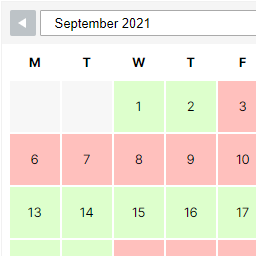
AnnoVisio 外掛可透過短碼 [annovisio] 在 WordPress 網站上顯示來自 Calendly 或公共 iCalendar/ICS 資料源的事件,提供緊湊的年度日曆和列表視圖,方便使用者查看和預訂活動。
【主要功能】
• 年度日曆與事件詳細對話框
• 支援公共 iCalendar/ICS 資料源
• Calendly 事件類型與發生時間同步
• 多日 Calendly 事件支援
• 直接開啟 Calendly 預訂彈出視窗
• 手動或自動更新 iCalendar/ICS 顯示快取
外掛標籤
開發者團隊
原文外掛簡介
AnnoVisio displays events from Calendly or a public iCalendar/ICS feed in a compact yearly calendar and list view through the shortcode [annovisio].
The fixed standard configuration uses exactly one source:
one Calendly account connected with a Personal Access Token, or
one public iCalendar/ICS feed from Google Calendar, Microsoft Outlook, Apple Calendar, or another compatible calendar system.
For Calendly sources, AnnoVisio synchronizes event types and occurrences, supports multi-day Calendly events, checks availability before booking, and opens the official Calendly booking popup when a bookable event is selected.
For iCalendar/ICS sources, the configured public feed is fetched server-side with the WordPress HTTP API and normalized into a WordPress transient. The configured calendar name and color are applied when the overview is rendered, so changing these display settings does not require a new feed fetch. No external frontend assets are loaded for iCalendar output.
The year grid is the default view. Event bars open a local detail dialog with title, date, calendar name, description, event URL when available, and the calendar page URL. The plugin displays the shortcode page itself as the event archive. It does not create event posts, standalone event detail pages, Google OAuth connections, or write access to any calendar.
Key features:
Yearly calendar with event detail dialog
Calendar and list views
Public iCalendar/ICS feed support
Support for public feeds from Google Calendar, Microsoft Outlook, Apple Calendar, and other compatible calendar systems
Configurable calendar name and color for the iCalendar/ICS feed
Server-side iCalendar/ICS fetching and transient-based caching
Manual iCalendar/ICS refresh and display-cache update
Recurring iCalendar/ICS events with RDATE and EXDATE support
Visible frontend errors for unavailable configurations, feed fetch errors, or parser errors
Calendly event type and occurrence synchronization
Manual or optional automatic Calendly synchronization
Multi-day Calendly events
Direct Calendly booking popup
Availability and sold-out checks before booking
Manual display-cache update without starting a Calendly synchronization
External services
The plugin contacts external services only when the corresponding source is configured.
Public iCalendar/ICS feed
When an iCalendar source is selected, the plugin sends a server-side HTTP GET request to the public ICS URL entered by the site administrator. The feed can come from any calendar provider that offers a public iCalendar/ICS feed URL, for example Google Calendar, Microsoft Outlook, Apple Calendar, or another compatible calendar system.
The request is made from the WordPress server using the WordPress HTTP API when the cache is empty or when an administrator uses the manual refresh action. The request is used only to retrieve and parse the calendar data.
The requested calendar provider receives the server request, including normal HTTP request metadata such as IP address and user agent. The plugin does not send visitor data to the feed URL from the browser and does not load external frontend assets for iCalendar output.
Administrators should only configure a public iCalendar/ICS feed URL whose provider, terms of service, and privacy policy are acceptable for their website. The destination and its terms and privacy policy depend on the service chosen by the administrator.
Calendly
When Calendly is selected, the plugin uses Calendly to synchronize event data, check availability, and open the official booking popup.
External Calendly resources:
Service: https://calendly.com
API: https://api.calendly.com
Widget script: https://calendly.com/assets/external/widget.js
Widget stylesheet: https://calendly.com/assets/external/widget.css
What is sent and when:
During manual or automatic synchronization, authenticated server-side GET requests are sent to the Calendly API with the Personal Access Token configured by the administrator.
The plugin requests the connected user, active event types, occurrences, and available times required by the existing synchronization and availability logic.
When a visitor clicks a Calendly event, the browser first calls this plugin’s REST endpoint on the same WordPress site. The plugin then checks the relevant event type, date, or UTC slot against Calendly.
The Calendly widget script and stylesheet are loaded only on calendar output that contains a Calendly source. Booking interactions inside the popup are handled by Calendly.
Calendly legal information:
Terms: https://calendly.com/legal/customer-terms-conditions
Privacy: https://calendly.com/legal/privacy-notice