內容簡介
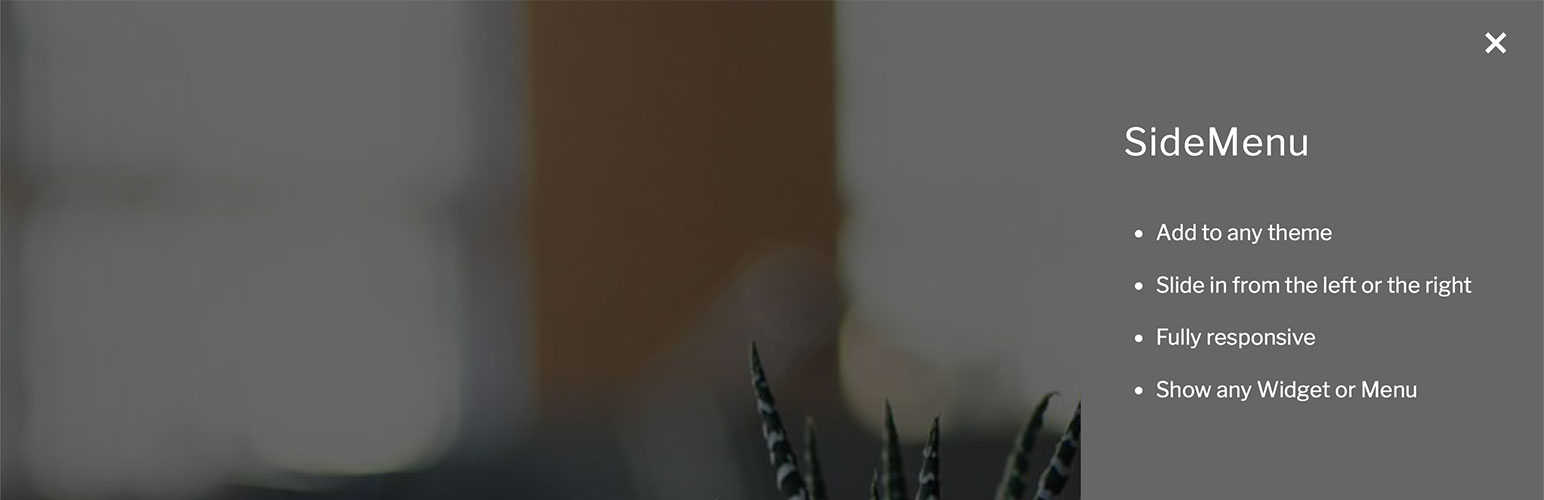
SideMenu 是一款可在網站側邊添加滑出面板的外掛,使用者可透過內容、佈局或模板中的按鈕開啟此面板。此外掛支援現代 WordPress 的區塊編輯,讓使用者能夠輕鬆管理可重用的 SideMenu 內容。
【主要功能】
• 提供可重用的 SideMenu 內容編輯功能
• 支援在文章、頁面及模板中添加 SideMenu 開啟按鈕
• 可自訂按鈕文字及漢堡圖示顯示
• 支援區塊樣式設定,包括顏色、字型及邊距
• 響應式滑出面板,具覆蓋層及關閉按鈕
• 兼容經典佈景主題及經典 SideMenu 功能
外掛標籤
開發者團隊
📦 歷史版本下載
原文外掛簡介
SideMenu adds an off-canvas panel that slides in from the side of your site and can be opened from a block button placed in your content, templates or template parts.
Version 2.0 introduces a block-first workflow for modern WordPress sites. Create reusable SideMenu content in the editor, choose the default SideMenu content for free blocks, then place the “SideMenu Open Button” block wherever visitors should be able to open the panel.
The block workflow is ideal for block themes and Full Site Editing because the SideMenu button can live directly in a template, header, navigation area, page or post.
Key features
SideMenu Open Button block for posts, pages, templates and template parts.
Reusable SideMenu content managed as its own editor content type.
Default SideMenu content selector in the editor.
Button text and hamburger icon controls.
Block styling support for color, typography, spacing, dimensions and borders.
Responsive sliding panel with cover overlay and close button.
Developer filters for default content and panel settings.
How to use the SideMenu block
Go to “SideMenus” in the WordPress admin and add the content you want to show in the sliding panel.
Add the “SideMenu Open Button” block to a post, page, template or template part.
Set the button text and choose whether to show a hamburger icon.
Choose the default SideMenu content from the editor’s SideMenu settings panel.
The free block uses one default SideMenu content item. Developers can filter the block content ID with the sidemenu_block_content_id filter.
Classic theme and classic SideMenu support
Classic SideMenu features are still available when your site uses a classic theme, or when the plugin detects existing classic SideMenu usage. This keeps existing shortcodes, widget sidebars, menu locations, mobile menu hijacks and Customizer settings working while giving block themes a cleaner setup path.
On classic themes, SideMenu loads the original Customizer-driven runtime. This provides the traditional SideMenu sidebar, menu location, shortcode, mobile menu hijack options and classic styling controls.
If you move an older site to a block theme, SideMenu checks for existing classic usage and keeps the classic runtime available when it finds classic SideMenu blocks, shortcodes, open links, widgets, menu locations or mobile menu hijack settings.
How to use the [sidemenu] shortcode
Classic shortcode support is still available when the classic runtime is active.
Use [sidemenu] to show the default button.
Use [sidemenu]My Button Title[/sidemenu] or [sidemenu title="My Button Title"] to show your own button text.
Use [sidemenu class="my-class" title="Filtered SideMenu Button"] to show a button that only displays classic widgets or menu items with the specified class.
To add a class to a menu item, go to “Appearance – Menus”, open “Screen Options” and enable “CSS Classes”. To add a class to a block widget, select the block in “Appearance – Widgets”, open the “Advanced” panel and use “Additional CSS class(es)”.
How to open SideMenu from a link
To use a normal link as a SideMenu button, give it the open_sidemenu class:
Example Link
To use an anchor link, set the link URL to #open_sidemenu.
For classic filtered content, add a dash and the class name to the anchor. For example, #open_sidemenu-testclass opens SideMenu and shows classic content marked with the testclass class.
Supported mobile menu hijacks
SideMenu can hijack the existing mobile menu button in a range of themes, including:
Astra
Auction Theme (AT10)
Avada
Avanam
BeTheme
Divi
Genesis Block Theme
Genesis Framework
Inspiro
OKAB
Twenty Seventeen
Twenty Twenty
Twenty Twenty-One
Twenty Twenty-Two
Varia and child themes such as Rockfield